Resilient Bloom
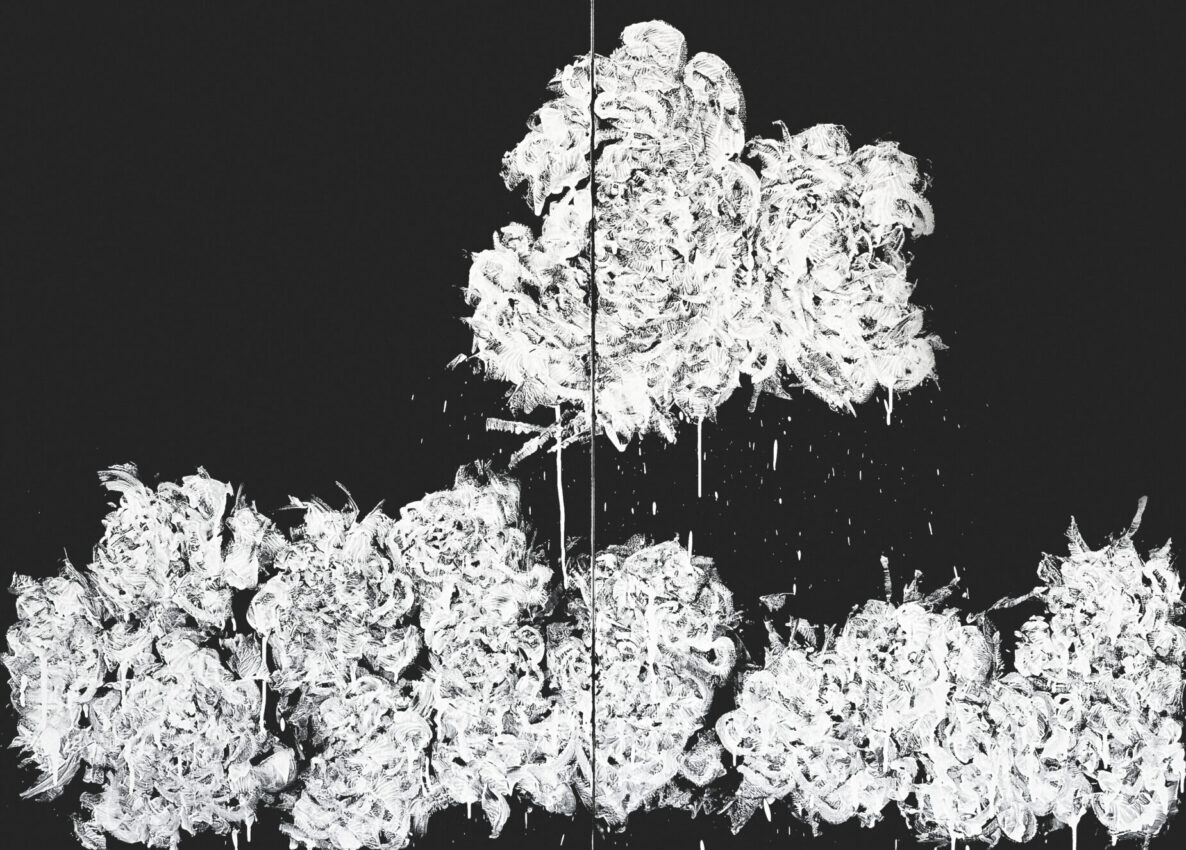
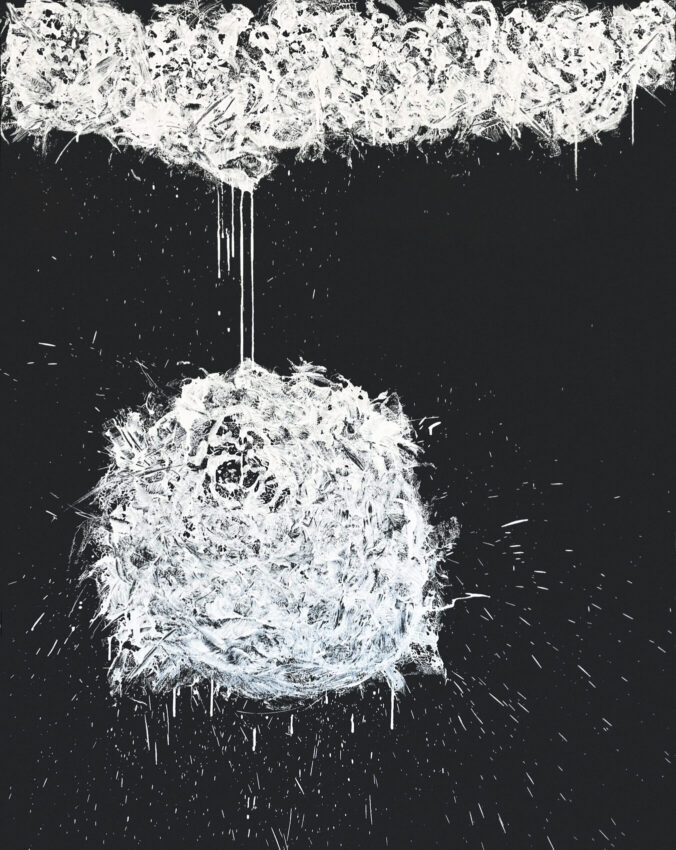
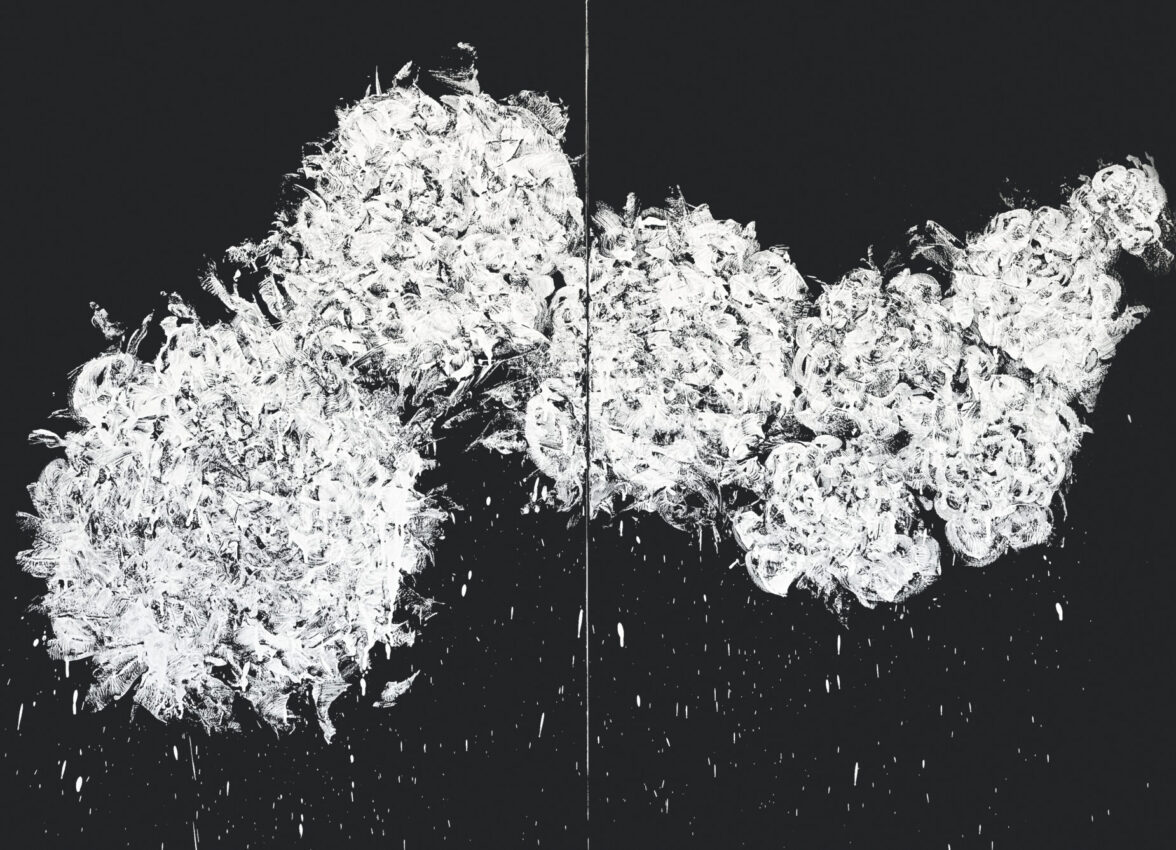
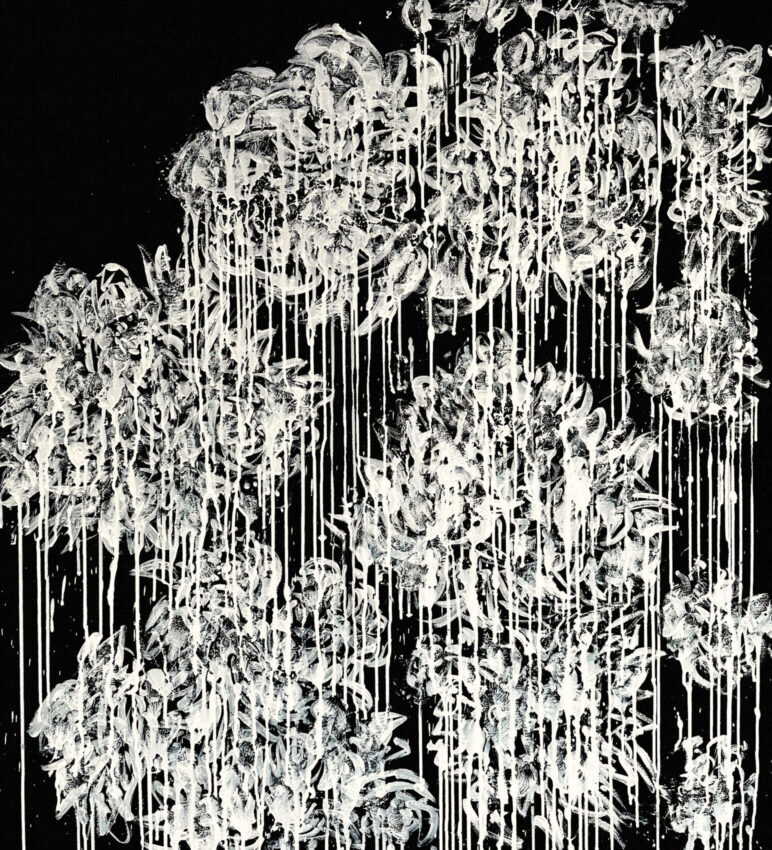
Resilient Bloom examines the instability of moral categories and the psychological tension produced by social judgment, cultural displacement, and collective systems of value. Through monochromatic floral compositions, the series investigates how concepts such as “good” and “evil” are continuously shaped, performed, and negotiated within social environments rather than existing as fixed or universal conditions.
The work emerges from Hasegawa’s long-term confrontation with moral ambiguity and experiences of social marginalization across different cultural contexts. Growing up in Japan, he developed close relationships with underground communities and individuals positioned outside normative social structures. These encounters complicated binary understandings of morality, revealing acts of care, solidarity, and vulnerability among those socially categorized as “bad,” while exposing forms of hypocrisy, violence, and exclusion within systems associated with moral correctness and social respectability.
Rather than presenting morality as a stable ethical framework, the series approaches it as a fluid and situational construct shaped by environment, perception, power, and collective behavior. This tension is further intensified through the artist’s experience of living in Spain as a Japanese individual navigating cultural translation, social projection, and persistent states of partial belonging.
Traditional Japanese tattoo culture operates as an important conceptual and visual reference within the series. Historically associated with both ornamentation and social stigma, tattooing functions here as a symbol of resistance against imposed moral hierarchies and normative systems of visibility. The chrysanthemum — a recurring motif in traditional Japanese tattooing — becomes a central perceptual structure within the work. Simultaneously delicate and resilient, the flower operates as a shifting signifier through which attraction, vulnerability, aggression, mourning, and transformation coexist without fixed resolution.
Executed primarily in black and white, the paintings reduce visual information to emphasize gesture, density, rhythm, and repetition. Through this restrained visual language, the chrysanthemum becomes increasingly abstracted, dissolving stable symbolic interpretation and instead operating as a psychological and perceptual field. The works do not attempt to provide moral conclusions, but rather expose the instability of binary systems that separate purity from corruption, belonging from exclusion, or beauty from violence.
Questions surrounding cultural ownership, appropriation, assimilation, and social integration remain intentionally unresolved throughout the series. Rather than proposing definitive answers, Resilient Bloom maintains a state of tension in which conflicting values, identities, and emotional conditions coexist simultaneously.
Within this unstable space, the chrysanthemum ultimately emerges not as a symbol of moral certainty, but as a resilient form capable of holding contradiction, ambiguity, and vulnerability at once.