Transition
Transition explores impermanence, dematerialization, and emotional transformation through the use of flowers in altered material states. The series is informed by the cultural practice of cremation in Japan, where physical dissolution operates not only as a funerary act, but also as a perceptual and psychological transition between presence, absence, memory, and acceptance.
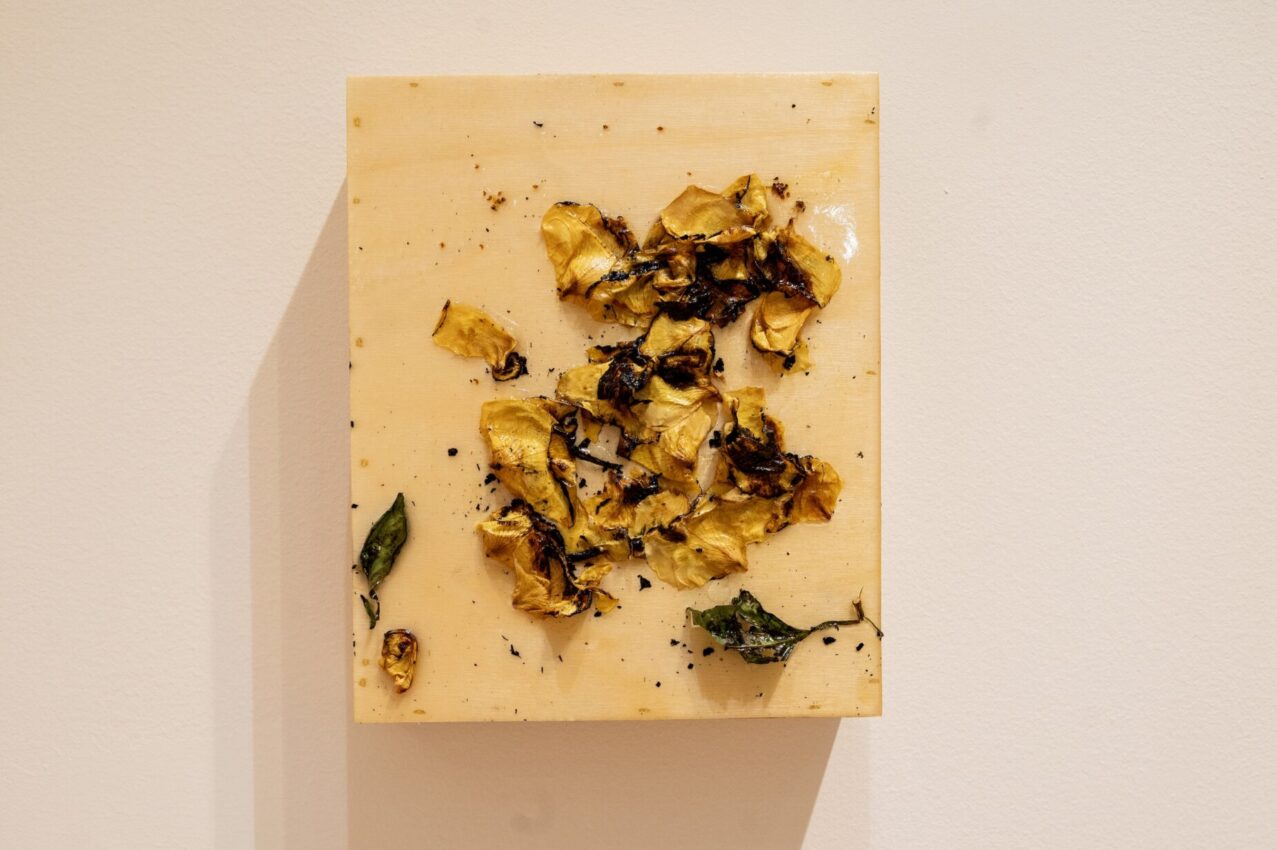
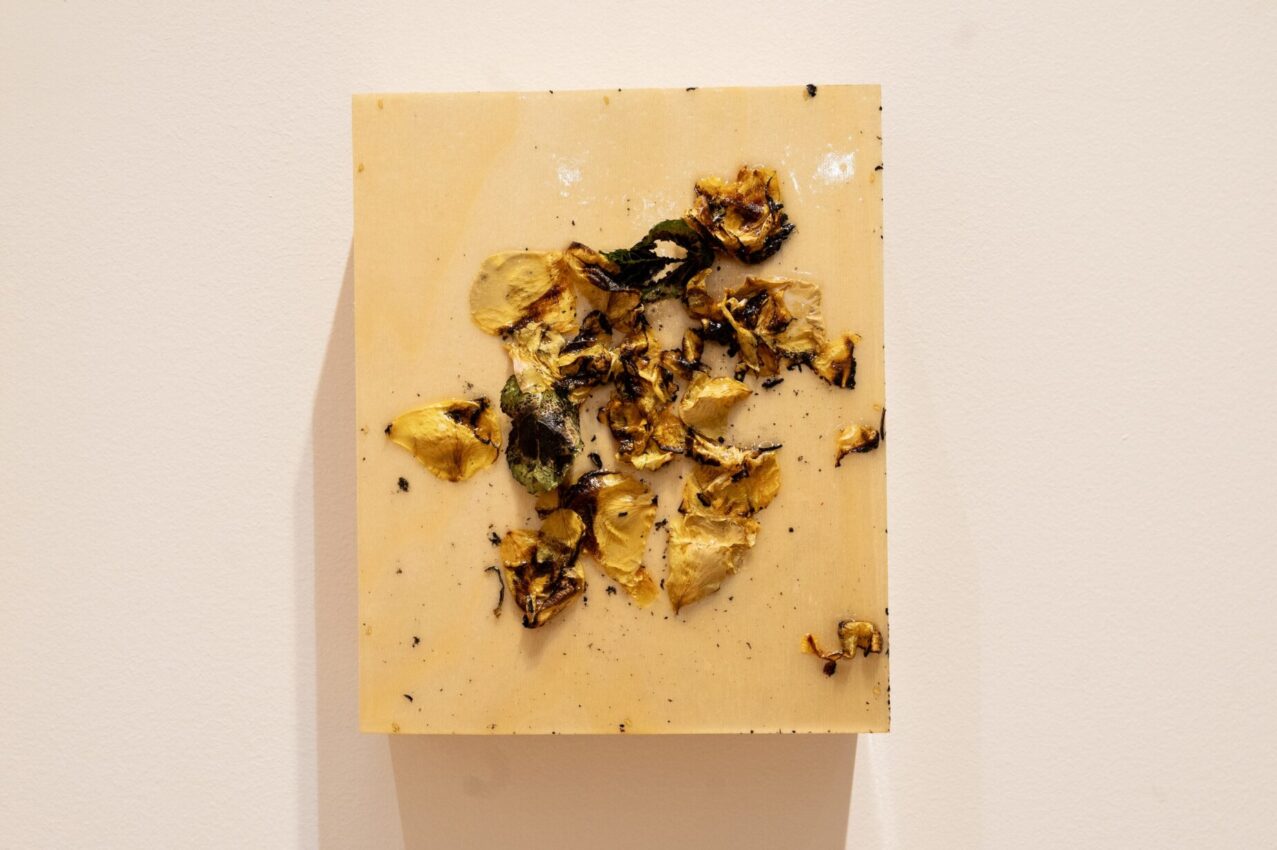
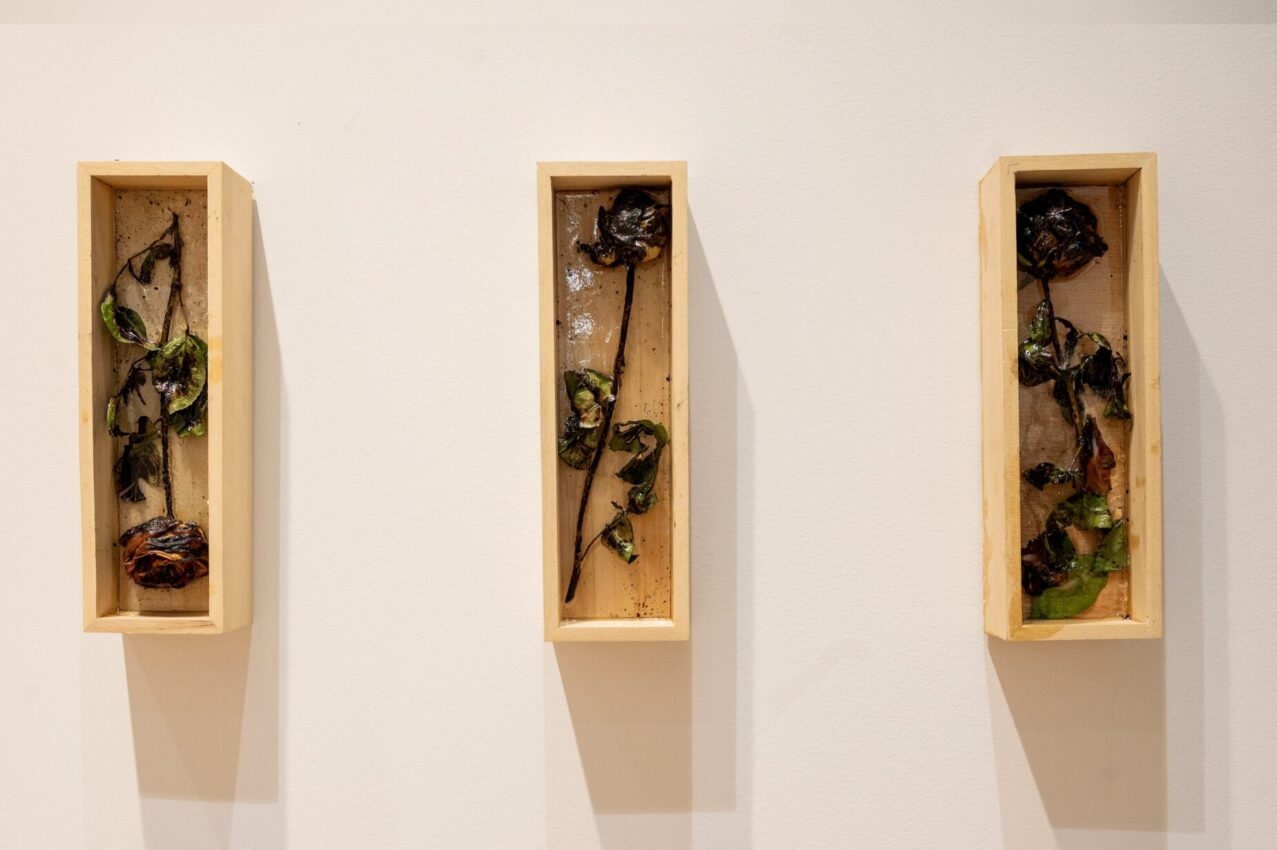
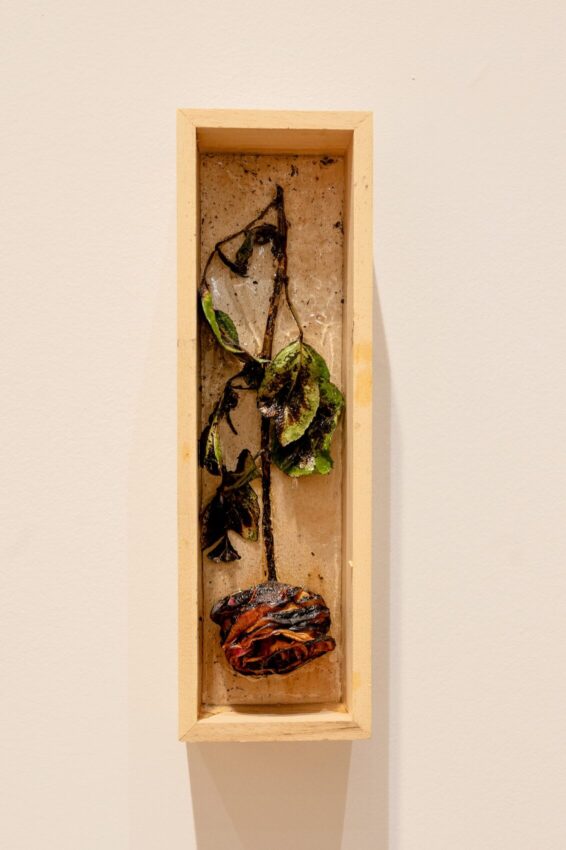
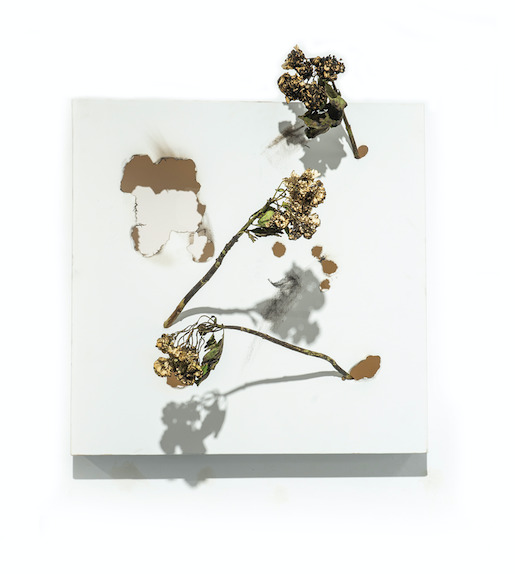
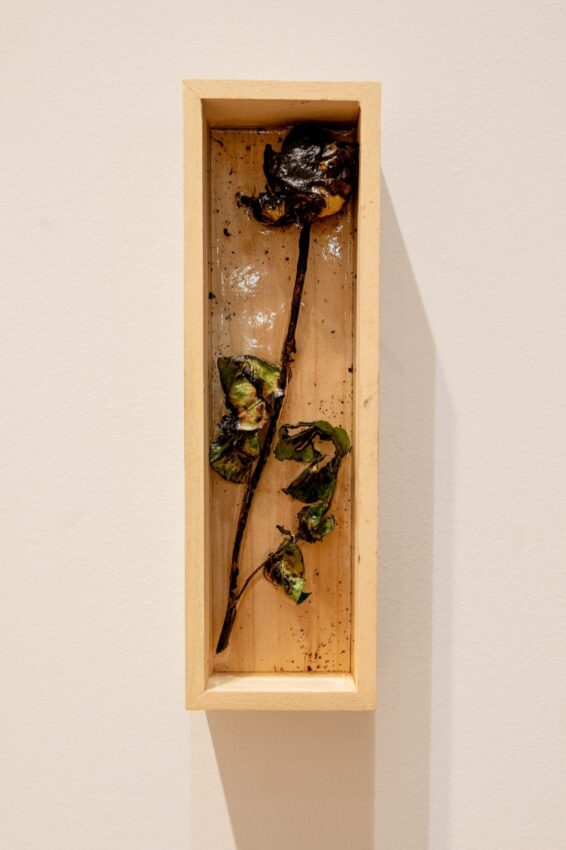
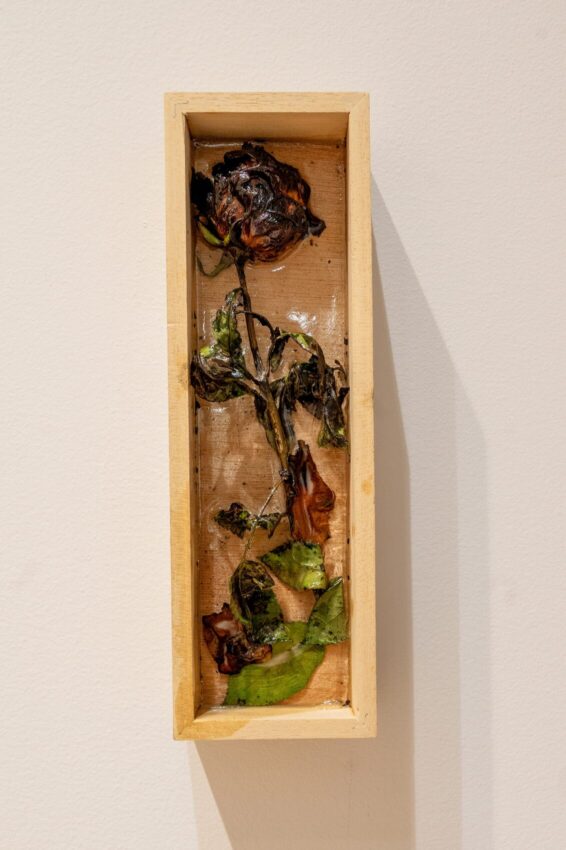
Central works within the series incorporate burned flowers preserved within abstract compositions. Through combustion, flowers traditionally associated with vitality, fragility, and ephemerality are transformed into delicate residual forms suspended between preservation and disappearance. The works examine how material destruction can simultaneously generate new forms of perception and emotional awareness. Rather than representing death directly, the burned flowers function as material traces of prior states — remnants of organic vitality and sensory beauty that can no longer be physically recovered.
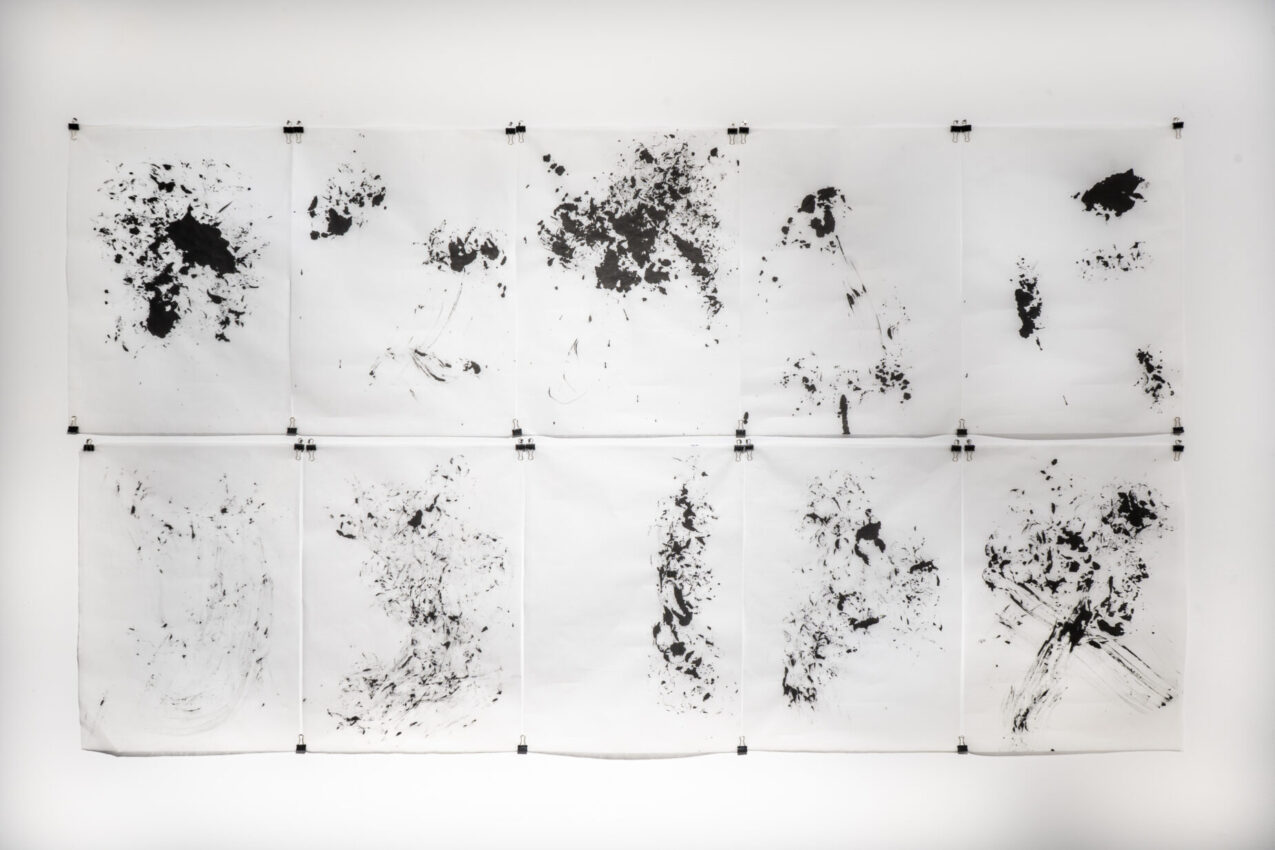
Alongside these works, the series also includes paintings created with fresh flowers used as brushes in combination with Japanese paper and calligraphy ink. Unlike the preserved burned flowers, these works are executed through rapid and highly ephemeral gestures, often completed within seconds or minutes. The speed of the process becomes essential to the work itself: marks emerge and dissipate almost simultaneously, resembling ash dispersing through air or the fleeting transition between appearance and disappearance.
The use of Japanese paper and calligraphy ink further intensifies this temporal condition. Ink absorption, fluid movement, and the fragility of the paper preserve the immediacy of bodily action without allowing correction or stabilization. Flowers operate not as symbolic motifs, but as perceptual instruments that introduce instability, tactility, and organic variation into each gesture. Through these accelerated processes, the works capture transient moments in which movement, sensation, and material interaction briefly converge before dissolving.
Across the series, Hasegawa investigates the instability of aesthetic experience itself. Viewers may initially approach the works through attraction toward the delicacy and beauty associated with flowers, only to encounter materials transformed into unfamiliar, fragile, or disappearing states. This perceptual shift produces a tension between beauty and absence, preservation and dissolution, material presence and psychological emptiness.
By preserving burned organic matter beneath layers of resin while simultaneously producing rapidly executed ink works that resist permanence, Transition oscillates between fixation and disappearance. The series does not treat impermanence as a symbolic theme, but as a structural condition underlying material existence, emotional experience, bodily perception, and memory itself.